
Frontier Bosses and Their Exploits
Turns Out You Can Build an Empire If Nobody Bothers to Stop You

I’ve been posting notes about the strangest warlords, bandits, and armed misfits I can find. So today’s article is just a roundup of some characters I have been reading a little about.
Throughout history there have been places where the government existed only as an optimistic suggestion. No tax collectors. No police. No governors. Just jungle or desert. Maybe mountains. Into these places rode a very particular kind of man. Traders. Smugglers. Mercenaries. Banditos. Explorers. History remembers kings and empires. These guys just set up shop and started taking people’s stuff.
TIPPU TIP
The Man Who Owned The Roads
Long before Europeans started sniffing around Central Africa, much of the region was controlled by a very ambitious merchant warlord. Born Hamad bin Muhammad bin Juma bin Rajab el Murjebi around 1837 in Zanzibar, Tipu Tip supposedly earned his nickname from the sound of his guns going off “tip... tip...” during raids. Beginning in the 1850s, he led enormous trading caravans into the Congo searching for ivory and enslaving people along the way. He built fortified trading posts and commanded thousands of porters, soldiers and other travelers. By the 1870s, his influence stretched across vast areas of Central Africa. He negotiated with local rulers, played war games with rivals, collected (took) tribute and controlled most major trade routes. European explorers thought they were entering an empty wilderness. It was actually Tippu Tip’s office.
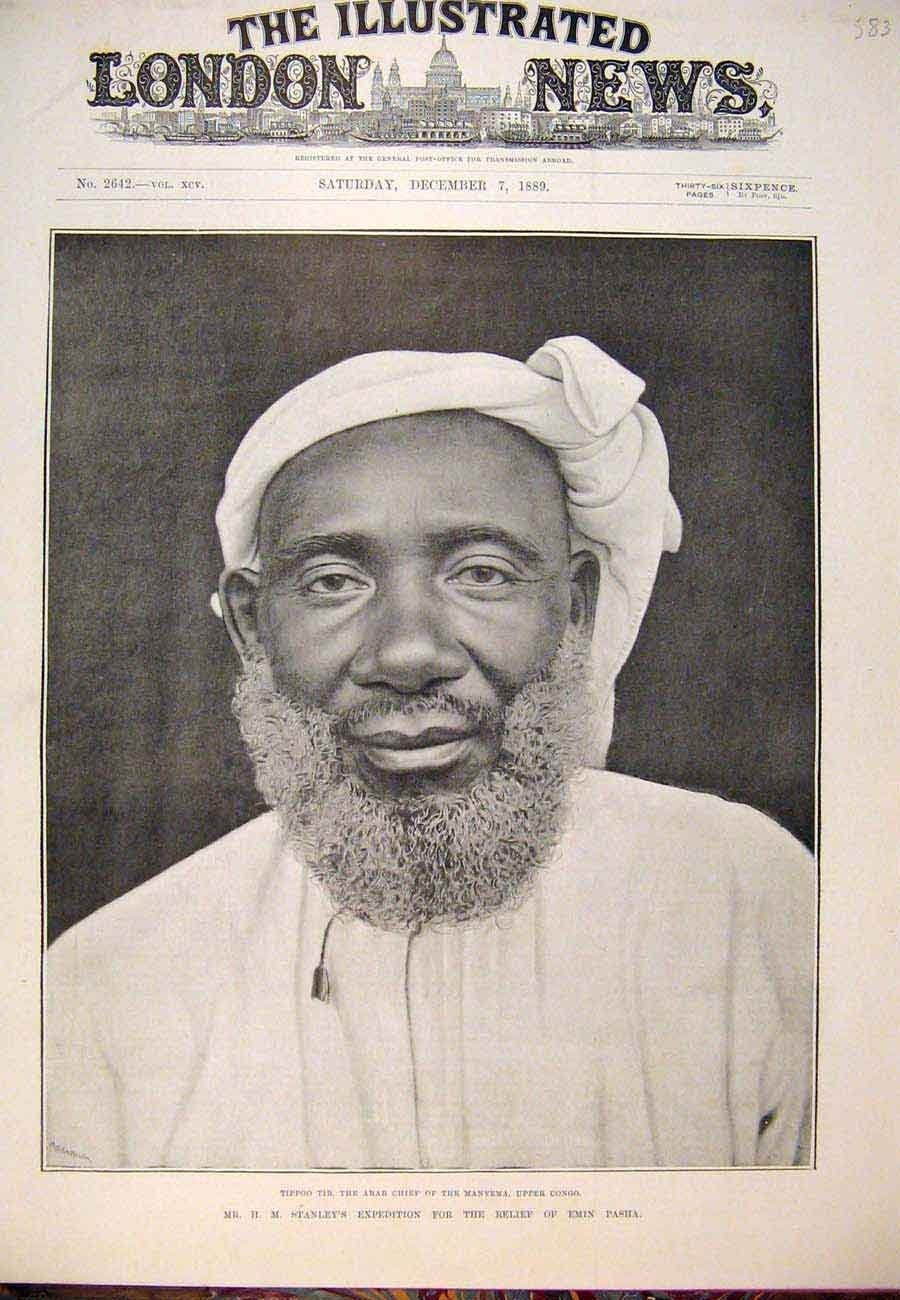
His influence became so large that the Europeans decided it was easier to work with him than against him. As an eample, explorer Henry Morton Stanley relied on Tippu Tip’s knowledge and manpower during expeditions, while King Leopold II’s Congo Free State appointed him governor of the Stanley Falls District in 1887, hoping to extend Belgian influence into the interior. Tipu Tip remained loyal to his own commercial empire though, which revolved around ivory and slave trading.
As European colonial rule got fatter in the late 1880s and 1890s, his power gradually faded. He retired to the island of Zanzibar, where he completed an autobiography before dying in 1905. For several decades, Tippu Tip had built a private empire so powerful that explorers, kings and colonial officials all had to ask for directions from THE MAN WHO ALREADY OWNED THE ROAD.
MSIRI
The Copper King
By the 1880s, Mwenda Msiri had accomplished something VERY DIFFICULT. He had turned himself from a trader into one of the most powerful players in Central Africa without inheriting anything or buddying up to a European army. Originally coming from what is now Tanzania, Msiri built his power through the copper, ivory and slave trading before establishing the Yeke Kingdom in Katanga (now the Democratic Republic of the Congo), a region rich in minerals. He armed his followers with firearms acquired through trade and gradually brought neighboring chiefs under his control. Eventually, anyone with motion in Katanga had to deal with him first.
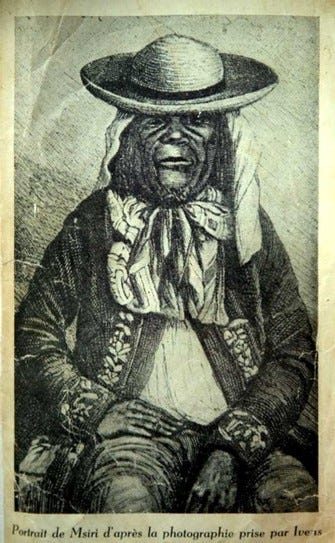
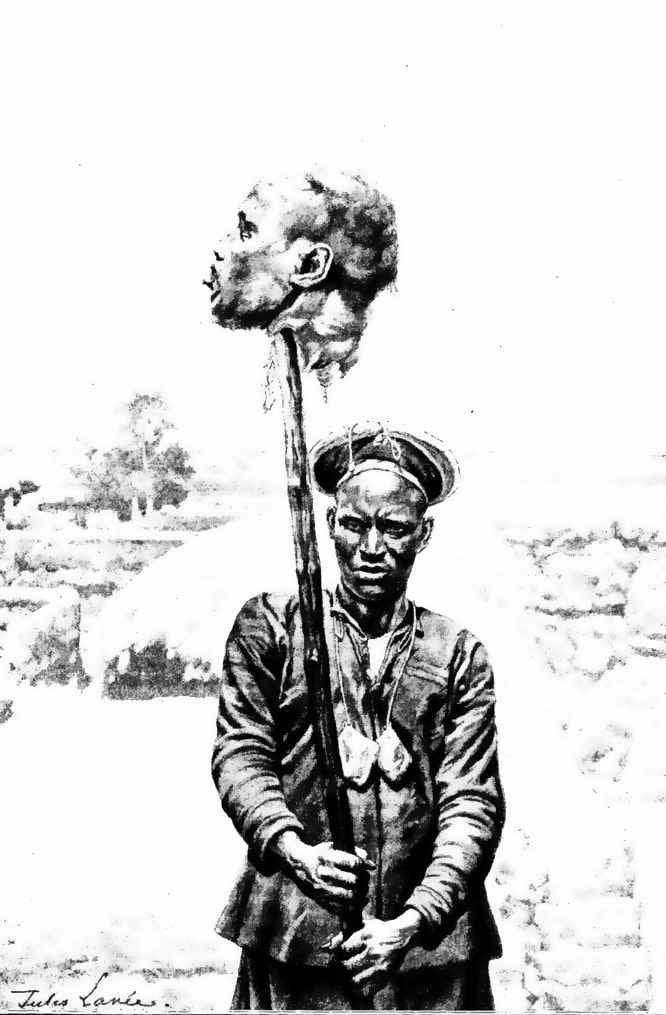
Unfortunately for Msiri, he had built up his kingdom at exactly the moment Europe decided Africa was up for grabs. During the Scramble for Africa, both Britain and King Leopold II’s Congo Free State wanted Katanga’s copper. Several expeditions tried to persuade Msiri to accept their authority. He declined. In 1891, the Belgian-backed Stairs Expedition confronted him at his capital. Negotiations deteriorated, and Belgian officer Omer Bodson shot and killed Msiri before being killed himself by Msiri’s warriors. The expedition then CUT OFF MSIRI’S HEAD, mounted it on a pole and displayed it to nearby villages to let everybody know who ran Katanga. It was a grim end to one of Africa’s last big time frontier rulers and an illustration of how the frontier itself was disappearing.
RABAH AZ-ZUBAYR
The Slave Soldier
Rabih az-Zubayr started it all as a slave soldier in the army of the Sudanese warlord al-Zubayr Rahma during the mid-19th century. After his master’s empire was dismantled by the Egyptians in the 1870s, Rabih gathered the surviving veterans and headed west, determined to set up on his own plot. Over the next two decades he carved out an empire stretching across parts of modern Chad, the Central African Republic and Nigeria. Armed with thousands of experienced soldiers and guns acquired through trade, Rabih was on a path of conquest before capturing Bornu in 1893, overthrowing a dynasty that had ruled the region for centuries. At his height he governed hundreds of thousands of people from territory larger than many European countries.
The problem with building your own empire is that eventually someone else will always try to SNATCH IT. By the late 1890s, France was chopping up Africa trying to connect its colonies, and Rabih was a problem. Rather than submit, he made war on the French. In April 1900, at the Battle of Kousséri, Rabih led his army against French forces commanded by Amédée-François Lamy. The battle ended with both commanders being killed.
Like old Msiri of the Yeke Kingdom, French troops severed Rabih’s head and displayed it as proof that another one of Africa’s most frontier rulers was gone. Like so many others, he had spent decades building a state through force of personality, military skill and opportunity only to have the Europeans come and spoil the pot.
WILLIAM WALKER
The Crazy American Who Invaded Nicaragua
In the mid-1800s, there existed a uniquely American profession known as the FILIBUSTER. This was a private citizen who invaded foreign countries without government approval in hopes of establishing a new state. Few were more into this type of work than William Walker. Born in Tennessee in 1824, Walker was a physician, lawyer and journalist before deciding that conquering countries sounded more interesting. After a failed attempt to seize part of Mexico in 1853, he turned his attention to Nicaragua, which was embroiled in a civil war. In 1855, Walker left from San Francisco and landed with just 58 mercenaries, offered his services to one faction and, through a combination of military victories, reinforcements and confidence, took control of the country. By July 1856, he had declared himself President of Nicaragua, a title even recognized by U.S. President Franklin Pierce.
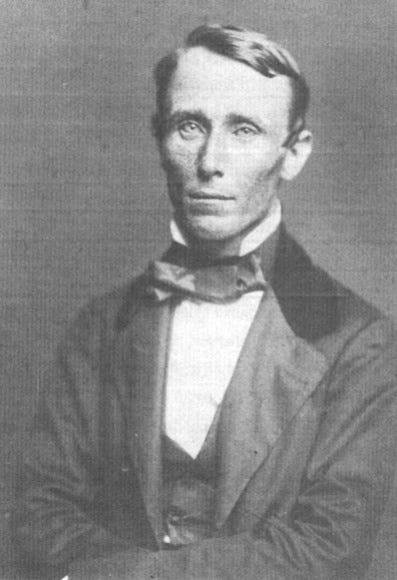
Walker immediately got to work reshaping the country to suit his ambitions. He restored slavery, which Nicaragua had abolished more than 30 years earlier, declared English an official language alongside Spanish and encouraged Americans to immigrate, hoping to transform the country into an English-speaking republic. This did not improve relations with his neighbors. Costa Rica, Guatemala, Honduras and El Salvador formed an alliance against him, while American shipping magnate Cornelius Vanderbilt, furious after Walker seized his company’s transit route across Nicaragua, helped finance Walker’s enemies. By 1857, Walker had been driven from the country.
Clearly nuts, he launched several more invasions before finally landing in Honduras in 1860, where he was captured by the British Royal Navy and handed over to Honduran authorities. At 36 years old, Walker was executed by firing squad. For one year a random guy from Tennessee had successfully conquered a foreign nation and sat in its presidential palace. Try doing that today.
BOB DENARD
The Mercenary Who Kept Taking Over the Same Country
By the 1960s, the age of colonial empires was ending but Bob Denard was not done with it. Born Gilbert Bourgeaud in France in 1929, Denard served in the French Navy before getting involed with mercenary warfare. Over 30 years or so, he fought in conflicts across the Congo, Yemen, Angola and Benin, earning a reputation as one of the world’s most notorious soldiers of fortune. His crown jewel was the tiny Indian Ocean nation of Comoros. Beginning with a coup in 1975, Denard became the island nation’s unofficial power broker. He helped overthrow governments, install presidents and, after another successful coup in 1978, ran the country from behind the scenes while officially serving as commander of the Presidential Guard. He even converted to Islam, took the name Saïd Mustapha Mhadjou, shacked up with a local woman (women?) and built his own political network. For over a decade, many observers joked that Comoros was less a sovereign state than Denard’s PRIVATE ISLAND FRANCHISE.
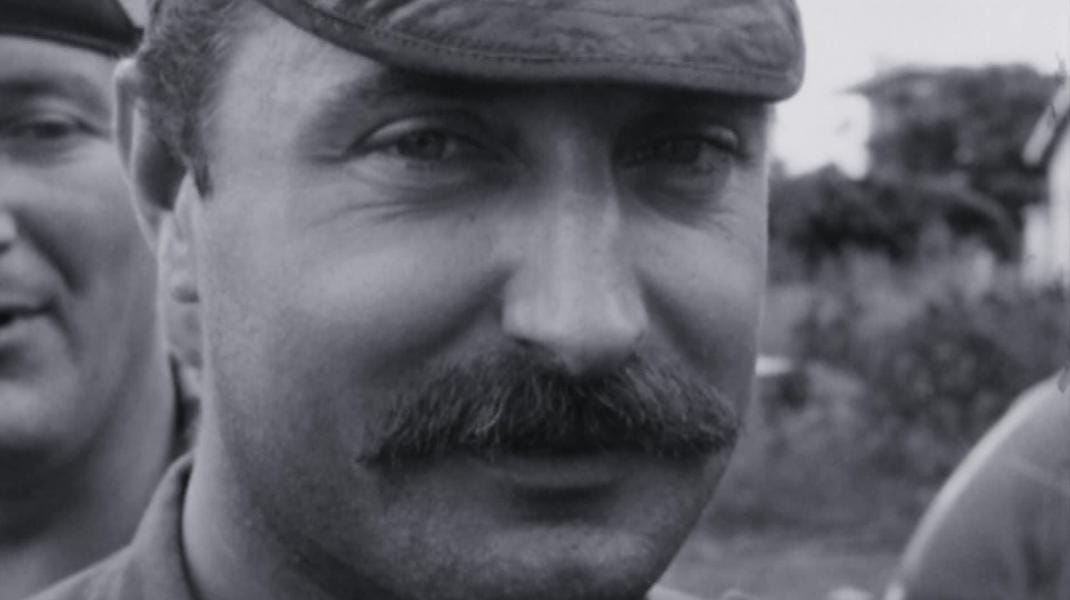
He kept getting away with it. Denard participated in or attempted more than TWENTY COUPS during his career, several successful. His operations often relied on just a few dozen highly trained mercenaries armed with speed, surprise and an understanding that under resourced governments were optional. France’s relationship with him remained deliberately ambiguous. Although Paris officially denied involvement, Denard frequently operated in places where French interests happened to benefit, leading many to suspect he enjoyed unofficial protection. His run finally ended in 1995, when he launched yet another coup in Comoros. This time, France wasn’t into it. French special forces landed during Operation Azalée, surrounded Denard’s men without fighting and flew the old mercenary back to France. It was an anti-climatic end for a great frontier boss.
ROMAN VON UNGERN-STERNBERG
The Mad Baron
The Mad Baron was born into a Baltic German noble family in 1886, and served with distinction in the Imperial Russian Army during the First World War before the Russian Revolution turned the empire upside down. While most officers either fled abroad or accepted defeat, Ungern became convinced that he had been chosen to save the old world. Democracy disgusted him. Communism was a disease to him. His solution was to ride east into Asia with what remained of his cavalry and build a new base for a monarchist counterattack. In 1920, leading a super diverse force of White Russians, Cossacks, Mongols, Tibetans and adventurers from across Asia, he crossed into Mongolia and expelled the occupying Chinese army from the capital of Urga (modern Ulaanbaatar). The grateful Bogd Khan, Mongolia’s spiritual ruler, was restored to the throne. Somehow, the Baron effectively commanded the army and held real power afterwards.
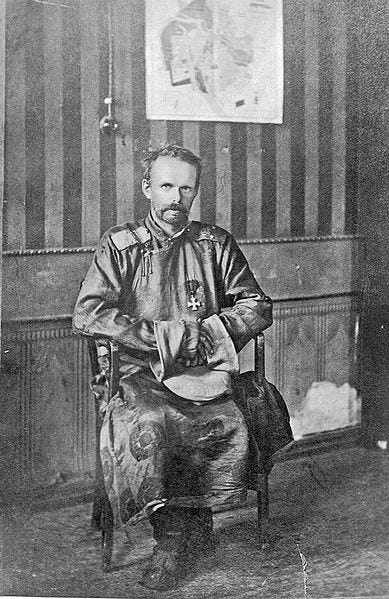
For several surreal months in 1921, the Mad Baron ruled Mongolia like a military man with a religious prophecy he wanted everyone to know about. He believed he was destined to restore monarchies across Asia, issued brutal punishments for suspected Bolshevik sympathizers, enforced discipline and prepared his troops for an invasion of Soviet Russia. Some followers viewed him as a mystical warrior but others thought he had lost his mind. Eventually, Soviet-backed forces and Mongolian revolutionaries advanced into the country, while the Baron’s officers, tired of erratic leadership, mutinied. They arrested Ungern in August 1921 and handed him over to the Red Army. After a public trial, he was executed by firing squad in September 1921, aged just 35.
VEERAPPAN
The Forest Warlord
For more than three decades, the Indian forests were home to a thick-mustached bandit named Veerappan. Born in 1952 in the village of Gopinatham on the Karnataka–Tamil Nadu border, Koose Munisamy Veerappan began as an elephant poacher before expanding into sandalwood smuggling, kidnapping and armed robbery. He learned his trade from an uncle and went off on his own when ready.
Operating across the dense forests of India he built a network of informants among remote villages and assembled a gang that knew their way around the remote regions of the country. At his peak, Veerappan was accused of killing around 184 people, including police officers, forest officials and civilians, while smuggling an estimated 65 tons of sandalwood and poaching roughly 500 elephants for their ivory. Entire police units entered the forest looking for him and often came back with nothing.
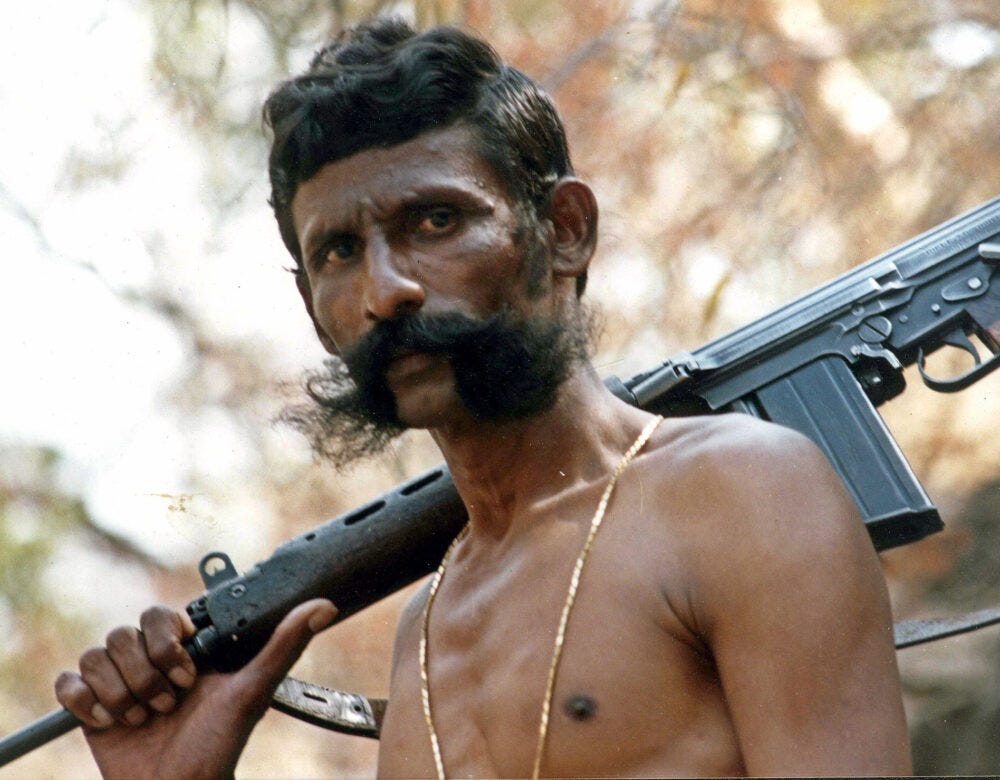
The Indian government spent years deploying thousands of police and Special Task Force personnel in one of India’s largest manhunts, costing far more than the value of the sandalwood he stole. He taunted authorities with kidnappings, famously abducting actor Dr. Rajkumar in 2000, triggering a political crisis and forcing senior government officials into negotiations with an outlaw hiding in the jungle. His reign finally ended in October 2004 during OPERATION COCCOON, when undercover officers convinced Veerappan he was being driven to receive medical treatment. Instead, the ambulance was surrounded by a Special Task Force, and Veerappan was killed in the ensuing gunfight. For 36 years, one man with a rifle, an encyclopedic knowledge of the forest and an extraordinary intelligence network had turned a patch of southern India into his own unofficial state. The roads belonged to him.
FIN
Frontier bosses rarely wore crowns. They preferred guns and jungle hideouts. They found places where governments had become tired, absent, corrupt or simply too far away to matter. They governed through fear, opportunity and the uncomfortable realization that nobody else was coming (or it would be hard to). Eventually every frontier is discovered though. The frontier boss outcome usually ends the same way. They usually get shot, betrayed or executed. But they do get to be the government for a while.
Very enlightening, edifying and entertaining essay. I now expect nothing less. (Knew Walker's story, of course, given my three years in the jungles of Nicaragua. And yes, it occured to me, more than once—and always after imbibing too much Flor de Caña rum, that I could take the country over. But that's a story for another time.)
Add James Brooks, the White Raja of Sarawak to the list.